
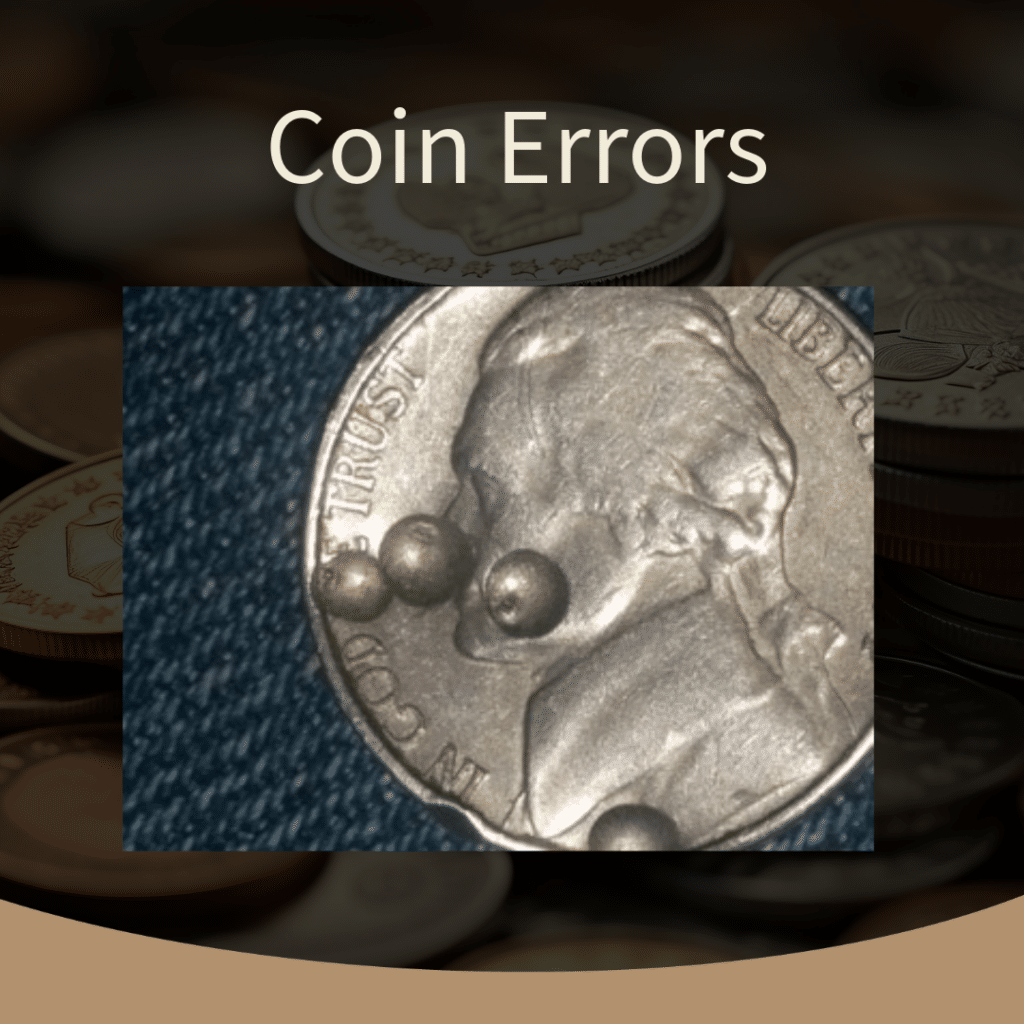
Newcomers to coin collecting may be surprised to learn that coin errors – mistakes made when coins are minted – often enhance rather than detract from the value of a coin. While flaws that decrease a coin’s attractiveness can also decrease its value, error coins, or flawed coins made in the mint during the coin-making process, are also rare. This is because minting defects happen rarely, particularly with the advent of modern technology. Additionally, most error coins are detected before they are issued into the coinage, and they are recycled and remade in their proper form.
How Do Coin Errors Happen?
In order to understand why errors occur, it’s useful to understand how coin minting has been done historically and is done now. Here’s a fun primer from the U.S. Mint. Here’s how coin errors happen during the minting process:
1. Planchet Errors
Before a coin is struck, a blank metal disc called a planchet is prepared. Errors can occur if the planchet is:
- Clipped: A portion of the planchet is accidentally cut off.
- Laminated: The metal layers separate or peel due to improper mixing or impurities.
- Wrong Planchet: A coin is struck on a planchet intended for a different denomination.
These errors often create highly collectible pieces.
2. Die Errors
Dies are the metal stamps that impress designs onto coins. Problems with dies can lead to:
- Die Cracks: Cracks form on the die, transferring raised lines onto the coin.
- Cuds: A piece of the die breaks off, leaving a raised blob of metal on the coin’s surface.
- Die Clashes: Dies strike each other without a planchet, creating unintended design impressions on coins.
Die errors often create unique patterns and can increase a coin’s appeal to collectors.
3. Strike Errors
Errors can also happen during the actual striking process. These include:
- Off-Center Strikes: Off-center strikes are the most frequent type of coin error; they occur when the coin blank or planchet does not land correctly on the collar (a circular piece of steel that acts as the wall of the coining chamber) and the die only strikes part of it. Off-center strikes can be off center by any percentage; coins that are 10% off center will show most of their design while coins that are 90% off center will hardly look like the coins they are supposed to be at all.
- Partial collar strikes – Partial collar strikes occur when the collar does not fully hold the edge of the coin blank. This results in a malformed rim, the most common of which is a circular line that fades away on part of the coin, although if the coin has edge reeding, it can look more like railroad tracks.
- Double Strikes: Double strikes are coins that did not eject from the collar when they were supposed to and so the die struck them more than once, creating a double impression of the coin on the planchet.
- Broad strikes – Broad strike mint errors happen when the coin is stuck without a collar. This means the metal is allowed to expand in diameter and they appear fatter than they should be. Broad struck coins can be centered or off center, but all the detail of the coin’s design must be present.
- Indents – Indented coin errors happen when two planchets are placed in one collar and the one on top is improperly placed. When the die strikes, it then creates a depression the shape of the top planchet on the coin below it.
- Brockage Errors: A coin sticks to the die and impresses its design onto the next coin, creating a mirror image.
Strike errors can vary in severity and rarity, with more dramatic examples often commanding higher premiums.
4. Minting Environment
Environmental factors such as machinery malfunctions, human error, and maintenance lapses can lead to:
- Misfeeds or jams in presses
- Inconsistent die pressure
- Mixed-up planchets or dies
These issues highlight the complex nature of modern minting and help explain why even with rigorous quality control, some errors slip through.
Are Mint Errors Valuable?
While not every error is valuable, coins with dramatic, clear, or rare errors often attract strong interest from collectors. Some errors, like the 1955 Double Die Lincoln Cent or the 2004 Wisconsin Extra Leaf Quarter, have become legendary in numismatic circles.
Understanding how coin errors occur helps collectors appreciate the craftsmanship—and occasional imperfections—that make each coin unique. If you’d like help evaluating or selling an error coin, contact Grand Rapids Coins. We’re here to guide you with expertise and integrity.
