

At Grand Rapids Coins, we have an especially strong interest in the detection of counterfeit and altered coins. In point of fact, anyone who deals with rare coins will develop a basic understanding of how to detect counterfeits, whether out of interest or necessity. If you are considering purchasing a rare date coin, or if you are looking to sell your coins, you may need to pay special attention to authenticity.
Common Warning Signs of Counterfeit Coins
- Incorrect Weight: Authentic coins have very precise weight standards. Use a digital scale accurate to at least 0.01 grams to check.
- Wrong Dimensions: Counterfeits may be slightly thicker, thinner, or have a different diameter than the real thing. Use calipers to measure.
- Off Coloring: Pay attention to surface color. Genuine silver coins, for example, often have a soft gray tone, while fakes may appear overly shiny or dull.
- Unnatural Details: Look for signs of casting, such as blurry features, soft edges, or pitting on the coin’s surface.
- Suspicious Pricing: If a coin’s price seems “too good to be true,” it probably is. Counterfeiters often lure buyers with attractive prices.
- Missing Mint Marks or Incorrect Fonts: Small errors in lettering style, spacing, or mint marks can expose a fake quickly to an experienced eye.
Tools to Help Detect Counterfeit Coins
Below are some generally effective ways to detect counterfeits without affecting the value of the coin:
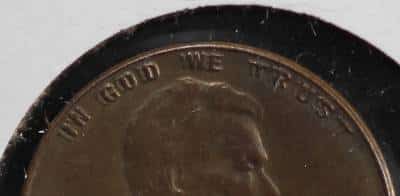
Examination: Use a high powered loupe or magnifier (8x magnification or greater) to closely examine the coin for mismatched edges, surfaces, and text spacing. It helps to have an authentic silver or gold coin for comparison. For example, the photo above shows a fake 1955 doubled die Lincoln Cent, which is usually the last coin added to a complete Lincoln set. At first glance, it may appear authentic, but if you look closely, the counterfeit shows far less detail than the authentic coin. The LIB of LIBERTY is quite soft and lacks the detail of the authentic coin. The date and the motto (IN GOD WE TRUST) show similar lack of detail.
Ping Test
A silver coin, when struck against another metallic object, has a certain high-pitched ring to it that becomes warmly familiar to collectors. If you gently tap your silver coin against another known silver coin, the coin should ring at a frequency of about 6125 Hz.
Magnet Test
Run a strong magnet over the coin. A large percentage of coins from Chinese counterfeit operations contain iron. The only U.S. coin that should contain any amount of iron is the 1943 steel penny.
Weight Test
Weigh the coin with a very sensitive gram scale, which should be accurate to within .1 gram. The U.S. Mint is very exacting in its standards, and the weight of the coin should not be more than 1% outside the specification for that coin (which you can find in coin references such as The Red Book). An exact weight is difficult to achieve for a counterfeiter using scrap metal, so counterfeit coins are usually underweight.
Diameter Test
Measure the coin’s diameter with a caliper that is accurate to within .01 inch. Again, you will need to compare that measurement with the specifications for that coin in your reference, but often a counterfeit coin will measure more than 1/8 inch too small.
The study of counterfeits and altered coins can become an engrossing topic on its own, so if you would like to learn more, check out PCGS’s excellent book Coin Grading and Counterfeit Detection.
How to Protect Yourself from Counterfeit Coins
By paying attention to certain cues, and employing a variety of tests, it is usually possible to learn whether a rare coin is authentic. Every collector should have the basics of counterfeit detection in his or her back pocket. Dealing with a reputable coin dealer is also a good way to avoid the hassle of counterfeit coins because there is no substitute for years of experience in counterfeit detection.
Counterfeit coins are becoming more convincing, but with the right knowledge and resources, you can confidently build a collection you’ll be proud of. Trust your instincts, and if you ever have doubts, consult professionals like the team at Grand Rapids Coins.
