
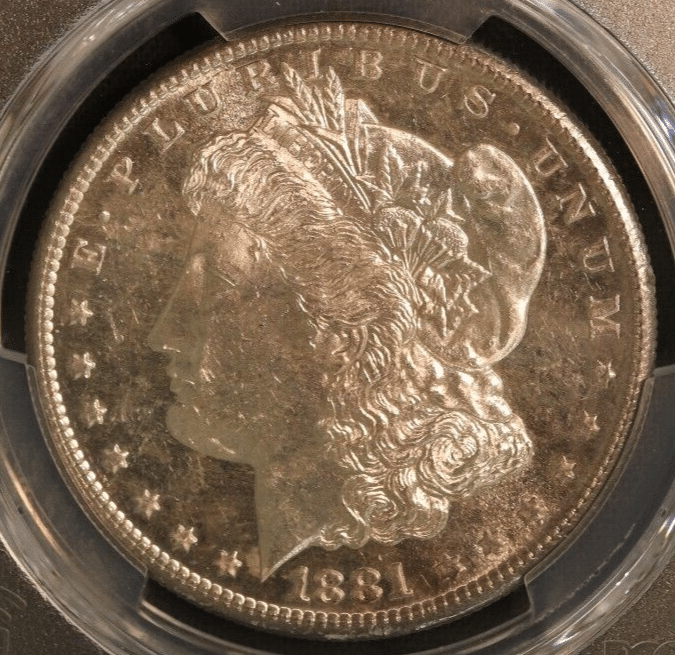
The Morgan silver dollar is one of the most iconic and sought-after coins in American numismatic history. First minted in 1878 following the passage of the Fourth Coinage Act of 1873, the Morgan dollar represents a pivotal moment when the U.S. economy shifted away from free silver.
What Prompted the Creation of the Morgan Dollar?
Before 1873, Americans could bring silver or gold bullion to the U.S. Mint and, after paying a small processing fee, have it coined into legal tender. At the time, the official gold-to-silver ratio was 16:1, meaning sixteen ounces of silver was equivalent in value to one ounce of gold. However, increased silver mining in the western U.S. caused the market value of silver to drop.
Savvy bullion owners could then profit by converting their now cheaper silver into coins that held face value, thereby artificially inflating the money supply. The result was monetary inflation, sparking the rise of the Free Silver movement, which remained a political flashpoint for decades.
George T. Morgan and the Design of the Silver Dollar
The Morgan dollar takes its name from its designer, George T. Morgan, a British engraver who was recruited to the U.S. Mint in 1876 by Mint Director Henry Linderman. Morgan worked under Chief Engraver William Barber, but his design was ultimately chosen for the new silver dollar.
Henry Morgan broke from tradition by modeling Lady Liberty after an actual American woman: Anna Willis Williams, a 19-year-old teacher from Philadelphia. Morgan believed her profile was “the most perfect he had seen in England or America.” Although Anna initially insisted on anonymity, her identity eventually leaked, leading to an outpouring of attention that she preferred to avoid throughout her life.
The reverse side of the Morgan dollar features a striking eagle with outstretched wings, clutching arrows and an olive branch—symbolizing both strength and peace.
Key Legislation: The Bland-Allison Act of 1878
On March 11, 1878, just a week after the Bland-Allison Act passed, the Mint struck the first Morgan dollars. The law required the U.S. Treasury to purchase large quantities of silver monthly and convert it into coinage at the government-mandated 16:1 ratio, despite market fluctuations.
The Mint produced Morgan dollars annually from 1878 to 1904, and then briefly revived this coin for one final minting in 1921. It also introduced a new commemorative series in 2021, celebrating the 100th anniversary of the coin’s final original minting.
Why the Morgan Dollar Matters
The Morgan dollar exists because of a rare convergence of economic policy, natural resource discovery, and political lobbying. Without the discovery of abundant silver deposits in the western U.S. and the push for inflation-friendly policies, this coin might never have existed.
Today, collectors value Morgan dollars not only for their silver content but also for their historical significance, design artistry, and rarity in high-grade condition. Some key-date Morgan dollars, like the 1893-S, can be worth thousands—even in worn condition.
Interested in Buying or Selling a Morgan Dollar?
Whether you’re just starting your coin collection or you’re looking to add a rare 19th-century silver dollar, Grand Rapids Coins is here to help. We offer expert appraisals, fair pricing, and a passion for helping collectors find truly special pieces of American coinage history.
Contact us today to start your search for the right Morgan silver dollar or to sell your existing coins with confidence.
